Covenant and Testament part 1
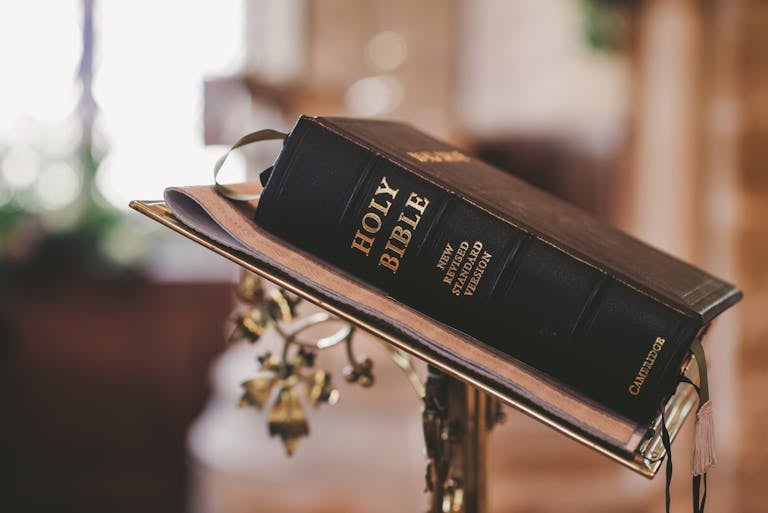
The Bible is viewed by many scholars as a theological document. This statement is normative in debunking the young earth cosmology view from the Conservative Christian tradition. At the same breath addressing the other Christian views that seek to juxtapose Science with the Biblical story of Creation. Of course, the Bible is the class of the Ancient Near East narrative yet stands alone in terms of its inspiration and authority. Having said that I believe the Bible isn’t just the Theology document rather – the covenant document. In our pursuit to understand the Bible we cannot ignore the huge role of covenants play within the Biblical scope. Covenants are not just part as thematic lance but life of the Bible’ data. Or someone will look at it as the very essence of its textual context. If this is anything to go by, the Bible reader cannot afford to be ignorant of them.
Let’s me start here, theology is a study about God His antology (being) and attributes. It is a very complex study which has always been the bone of contention in both religions and philosophy field. The study covenants meanwhile solves the mystery of God. It takes God from the abstract and mystical world to the sphere of man where He becomes personal and invested in their affairs. God without a covenant seems to be a mysterious being in the shadows unpredictable, destant, and shut of from His creation. This is what the Greek pantheons views as emination; the God who naturally is the creator but is not interested in his own creation. The concept of God apart from a covenant remains a unsolvable in as far as mankind and creation is concerned. However, in view of covenant the mystery of God is solved, not only solved He becomes personal and relatable. If covenant plays such a crucial role in the Biblical narrative, we ought to understand from etymology, definition to conception. Perhaps to simplify this, covenant is what you would view as the Testament. Our protestant canon is divide into two Testaments which are designated as old and new. In the West Tertullian rendered diathēkē into Latin by instrumentum (a legal document) but later in the 4th century testamentum was used by Jerome in his Latin Valgate. Which is the cause was the latter word to have survived—unfortunately, since the two parts of the Bible are not ‘Testaments’ in the ordinary sense of the term. Since the New Testament is written in Greek, the word covenant comes to us from the feminine noun diathēkē(διαθήκη) according to Strongs number G1242 – properly a disposition, that is, (specifically) a contract (especially a devisory will): – covenant, testament. Simply put the word covenant in Greek is what we understand as the contract, agreement or will. Galatians 3:15 the word διαθήκη is used in a sense of the will:
“Brethren, I speak after the manner of men; Though it be but a man’s covenant, yet if it be confirmed, no man disannulleth, or addeth thereto.”
Paul in the above passage uses this word in the context which we are exposed to. It is important though to note that the New Testament builds from the Old Testament epistemology. So the concept of covenant must be understood from the Old Testament perspective. The Hebrew Bible uses the word בּרית (berı̂yth) which is used in the sense of cutting. In the OT a covenant was established by cutting of the flesh by spilling of the blood. Perhaps here we can understand covenant theologians when they talk about, blood covenant. The first time we see the rite of covenant (Genesis 15:9-11 & 17,18) the covenant between Abram and God was enacted by blood. Hebrews 6:13-18, the writer reflects on this:
“For when God made promise to Abraham, because he could swear by no greater, he sware by himself, Saying, Surely blessing I will bless thee, and multiplying I will multiply thee. And so, after he had patiently endured, he obtained the promise. For men verily swear by the greater: and an oath for confirmation is to them an end of all strife. Wherein God, willing more abundantly to shew unto the heirs of promise the immutability of his counsel, confirmed it by an oath: That by two immutable things, in which it was impossible for God to lie, we might have a strong consolation, who have fled for refuge to lay hold upon the hope set before us“
There heirs of the promise refereed to above were the new covenant Jewish believers who had come to the faith in Christ. It was to them God ensured His unwavering promise to them he established the covenant on two immutable components the promise and an oath. These two total the Abrahamic covenant. Now, the ideology or concept of covenant on the base is blood. And blood is the soul/life (Gen. 11:4-5; Leviticus 17:11-14; Deuteronomy 12:23). So the covenant in this regards is based on life which makes it immutable and perpetual. An important aspect of the covenant in the Hebrew Bible yet is it’s depth beyond both biological and marital relationship. “And it came to pass, when he had made an end of speaking unto Saul, that the soul of Jonathan was knit with the soul of David, and Jonathan loved him as his own soul” (1 Samuel 18:1) and 1 Samuel 18:3, “Then Jonathan and David made a covenant, because he loved him as his own soul”. The covenant takes the relationship into a deeper, peculiar and intimate level. God in the spectrum of this chose the patriarchs and entered into relationship with them to ensure His divine promises bearing on the generations to come. There are 8 mentioned covenants in the Bible, binary and none binary. By binary we mean involving the two parties which makes that particular covenant conditional. None binary involving one which makes it unconditional. The following are the covenants by their sequence:
- Adamic cosmological Covenant.
ASV, “But they like Adam have transgressed the covenant: there have they dealt treacherously against me.” (Hosea 6:7).
This indicate to us that in Eden there was some form of covenant which was common to that which was established between YHWH and Israel. If this covenant could be breakable it, this implies that it was biliteral and conditional,” But of the tree of the knowledge of good and evil, thou shalt not eat of it: for in the day that thou eatest thereof thou shalt surely die” (Genesis 2:17). All this takes place in the divine space called the garden of Eden.
- Abramic covenant based on the promise.
“In the same day the LORD made a covenant with Abram, saying, Unto thy seed have I given this land, from the river of Egypt unto the great river, the river Euphrates” (Genesis 15:18).
This covenant is unilateral or none binary, Abram had no role to play, it rested on the faithfulness of the Almighty. Therefore this stood as an unconditional on the immutable ground of God’s sovereignty.
- Abrahamic covenant of circumcision.
Genesis 17:10-14, This is my covenant, which ye shall keep, between me and you and thy seed after thee: every male among you shall be circumcised. And ye shall be circumcised in the flesh of your foreskin; and it shall be a token of a covenant betwixt me and you. And he that is eight days old shall be circumcised among you, every male throughout your generations, he that is born in the house, or bought with money of any foreigner that is not of thy seed. He that is born in thy house, and he that is bought with thy money, must needs be circumcised: and my covenant shall be in your flesh for an everlasting covenant. And the uncircumcised male who is not circumcised in the flesh of his foreskin, that soul shall be cut off from his people; he hath broken my covenant.
This is clearly a biliteral and conditional covenant exhibited in the circumcision of Abraham’s posterity (male children). Circumcision was to be a sign or symbol of covenant upon the foreskin of the male children in Abraham’s household.
- The first major covenant between God and Israel.
“Now therefore, if ye will obey my voice indeed, and keep my covenant, then ye shall be mine own possession notefrom among all peoples: for all the earth is mine: and ye shall be unto me a kingdom of priests, and a holy nation. These are the words which thou shalt speak unto the children of Israel” (Exodus 19:5,6).
“And Moses took half of the blood, and put it in basins; and half of the blood he sprinkled on the altar. And he took the book of the covenant, and read in the audience of the people: and they said, All that Jehovah hath spoken will we do, and be obedient. And Moses took the blood, and sprinkled it on the people, and said, Behold the blood of the covenant, which Jehovah hath made with you noteconcerning all these words” (Exodus 14:6-8).
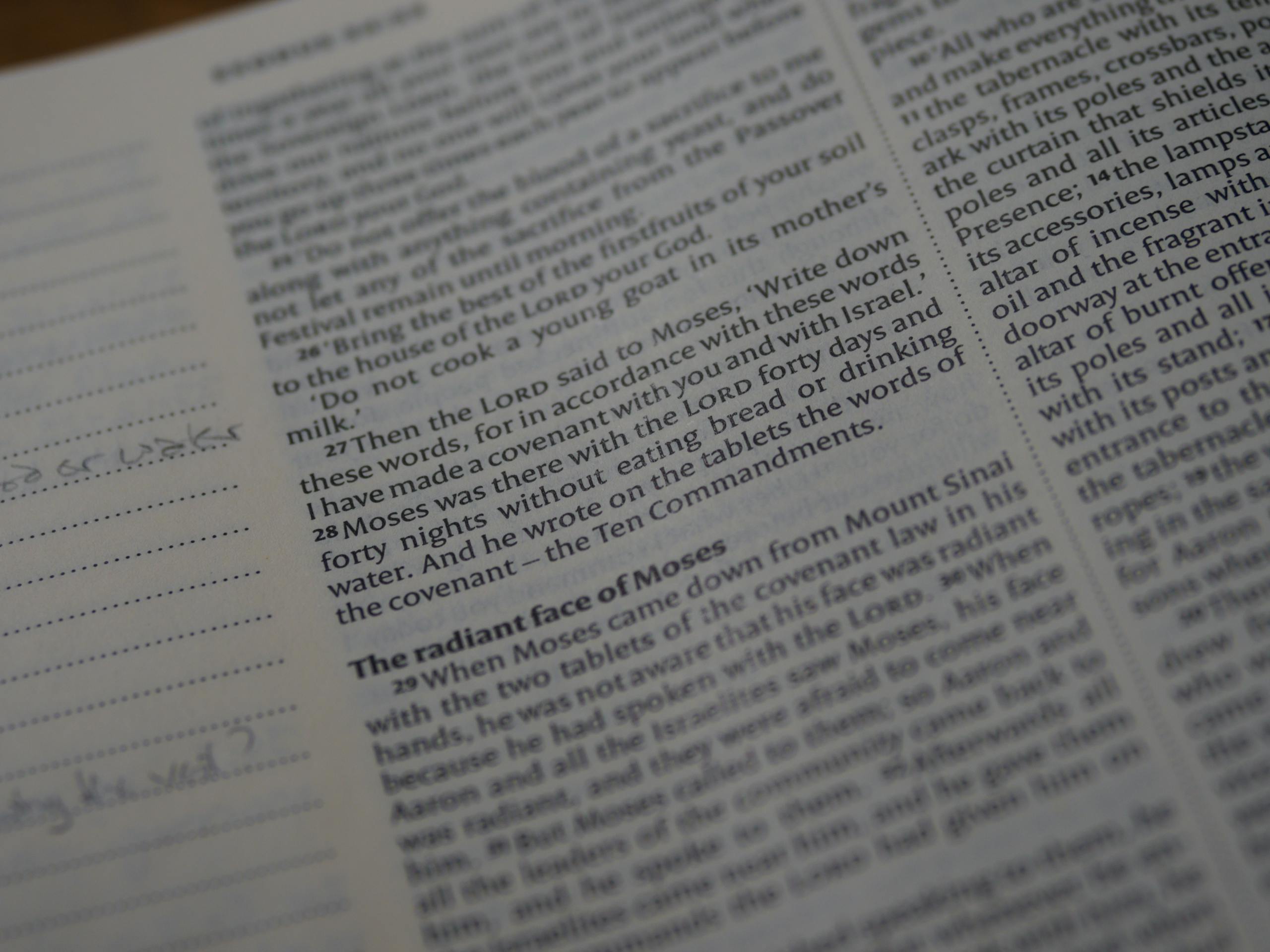
This is the binary and conditional covenant established on the pros and cons of the law, the so called 10 commandments. Other commandments were supporting the 10. Every time the Hebrew Bible speaks of the covenant it is the 10 commandments i.e – Isaiah 24:5; Jeremiah 11:1-4; 22:9
- The Phinehas covenant.
“Phinehas, the son of Eleazar, the son of Aaron the priest, hath turned my wrath away from the children of Israel, in that he was jealous with my jealousy among them, so that I consumed not the children of Israel in my jealousy. Wherefore say, Behold, I give unto him my covenant of peace: and it shall be unto him, and to his seed after him, the covenant of an everlasting priesthood; because he was jealous for his God, and made atonement for the children of Israel” (Numbers 25:11-13)
This is covenant is based on the royal grant on the bases of good will due to Phinehas’ zeal act of executing judgement on the apostates during the exodus. It is the covenant that is none binary and unconditional from the time he merited it (1 Chronicles 6:4).
- Davidic Covenant.
“When thy days are fulfilled, and thou shalt sleep with thy fathers, I will set up thy seed after thee, that shall proceed out of thy bowels, and I will establish his kingdom. He shall build a house for my name, and I will establish the throne of his kingdom for ever. I will be his father, and he shall be my son: if he commit iniquity, I will chasten him with the rod of men, and with the stripes of the children of men; but my lovingkindness shall not depart from him, as I took it from Saul, whom I put away before thee. And thy house and thy kingdom shall be made sure for ever before thee: thy throne shall be established for ever” (2 Samuel 7:12-16).
“And it shall come to pass, when thy days are fulfilled that thou must go to be with thy fathers, that I will set up thy seed after thee, who shall be of thy sons; and I will establish his kingdom. He shall build me a house, and I will establish his throne for ever. I will be his father, and he shall be my son: and I will not take my lovingkindness away from him, as I took it from him that was before thee; but I will settle him in my house and in my kingdom for ever; and his throne shall be established for ever” (1 Chronicles 17:11-14).
This is none binary unconditional covenant to David an his seed. David will not lack a seed to dwell on his throne and his kingdom will be established forever.
- The New Covenant.
Jeremiah 31:31-34, “Behold, the days come, saith Jehovah, that I will make a new covenant with the house of Israel, and with the house of Judah: not according to the covenant that I made with their fathers in the day that I took them by the hand to bring them out of the land of Egypt; notewhich my covenant they brake, although I was a husband unto them, saith Jehovah. But this is the covenant that I will make with the house of Israel after those days, saith Jehovah: I will put my law in their inward parts, and in their heart will I write it; and I will be their God, and they shall be my people. And they shall teach no more every man his neighbor, and every man his brother, saying, Know Jehovah; for they shall all know me, from the least of them unto the greatest of them, saith Jehovah: for I will forgive their iniquity, and their sin will I remember no more.”
This is the none binary, royal grant upon the unconditional working of YHWH himself. This is a covenant enacted on new bases by which God Himself does the redemptive work. It pertains things of the end (eschaton). This is the ultimate covenant in redemptive tail. So, the first covenant on our list is what we would term the protology (prologue) the introduction of the covenant cosmology/Eden which starts with order, then is led into disorder and displacement of Adam. The last of the covenants is the restoration and the reformation of paradise via the house of Israel and Judah. To be continued…